The Cold Office Survival Guide
Socks that fit in dress shoes. Gloves you can type in. Layers nobody can see. Your complete warmth plan for the coldest office.
Your office is 68°F. Your feet say otherwise. You can’t control the thermostat, space heaters are banned, and cotton socks aren’t solving it. This guide is the fix.
Build your cold office kit
Three questions. A personalized warmth plan.
Why your office is cold (and why you feel it more)
OSHA recommends 68°F to 76°F. Most offices sit at the low end. If it feels cold, it probably is.
But the thermostat is only half the problem. Sitting still is the other half. Movement generates heat. Eight hours at a desk and your body settles into its lowest gear. Your hands and feet are the first to feel it. That is why your fingers stiffen and your toes go numb while your torso feels fine.
It hits some people harder than others. Office thermostats were calibrated to the metabolic rate of a 40-year-old man. Women produce less body heat at rest. When researchers tested cognitive tasks at different temperatures, women's performance climbed with each degree of warmth. Men's dipped slightly. The conclusion: most offices are colder than they should be.
Cold hands type slowly and make more mistakes. A Cornell study put numbers on it: 44% fewer errors and 150% more output when the office warmed from 68 to 77 degrees. You probably cannot change the thermostat. You can change what is closest to your skin.
Socks that fit inside work shoes
Cold feet are the first thing you notice and the last thing to resolve. The problem with most thermal socks is bulk. Thick socks don't fit in dress shoes. And a sock that makes your shoe too tight is uncomfortable all day, and more noticeable when your feet are already cold.
ULTRA LITE socks solve this. 1.0 TOG, 3× warmer than cotton, in a profile thin enough for oxfords, loafers, and heels. The warmth comes from the yarn, not from thickness. Short-loop thermal pile traps warm air close to your skin. Cotton does the opposite: it absorbs moisture and conducts heat away from your foot, which is why your cotton socks feel cold by 10 a.m. ULTRA LITE replaces that with insulation that works while you sit still.
If your shoes have more room, or you wear sneakers or boots to work, LITE socks are the step up: 1.6 TOG, 5× warmer than cotton, in a medium-weight profile.
| ULTRA LITE | LITE | |
|---|---|---|
| TOG rating | 1.0 | 1.6 |
| Warmth vs cotton | 3× | 5× |
| Best for | Dress shoes, oxfords, loafers, heels | Sneakers, boots, casual shoes |
| Profile | Thin, lightweight | Medium weight |
Both have a non-binding comfort top that does not squeeze your calf or leave a mark at the end of the day.
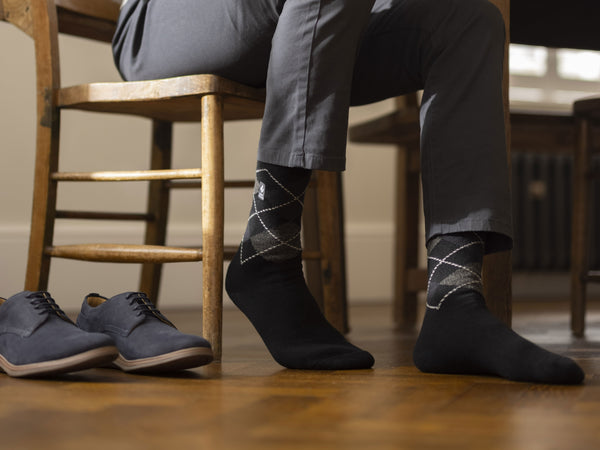
Men's ULTRA LITE Socks
Thin enough for dress shoes. 3× warmer than cotton.
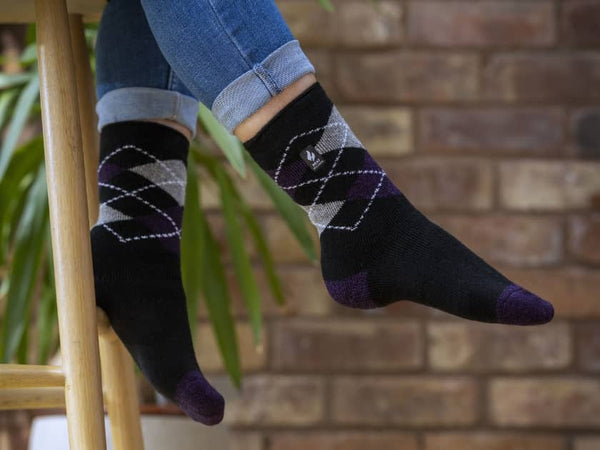
Women's ULTRA LITE Socks
Thin enough for heels and flats. 3× warmer than cotton.
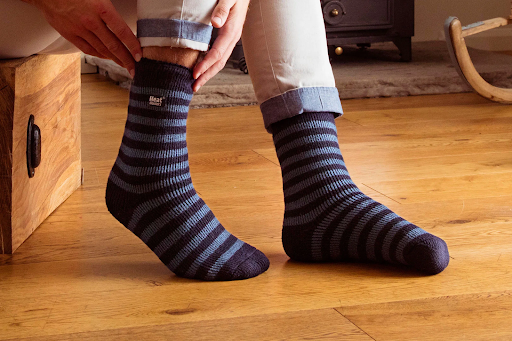
Men's LITE Socks
Fits sneakers and casual shoes. 5× warmer than cotton.
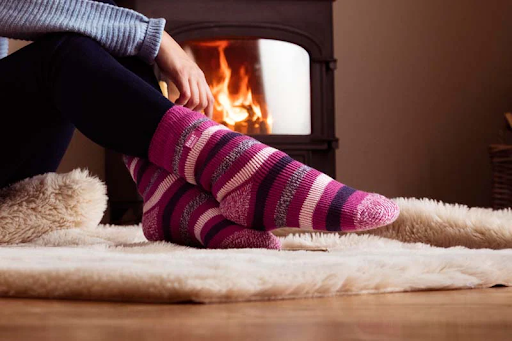
Women's LITE Socks
Fits boots and casual shoes. 5× warmer than cotton.
Fingerless gloves you can type in
Cold fingers slow down. Full gloves make typing impossible. Fingerless gloves keep your hands warm and your fingers free.
Heat Holders Fingerless Gloves cover your palms, wrists, and the base of each finger with HeatWeaver lining. Your fingertips stay free for keys, touchscreens, and trackpads. The long cuff seals out drafts at the wrist. Your hands stay warm. Your fingers stay fast.
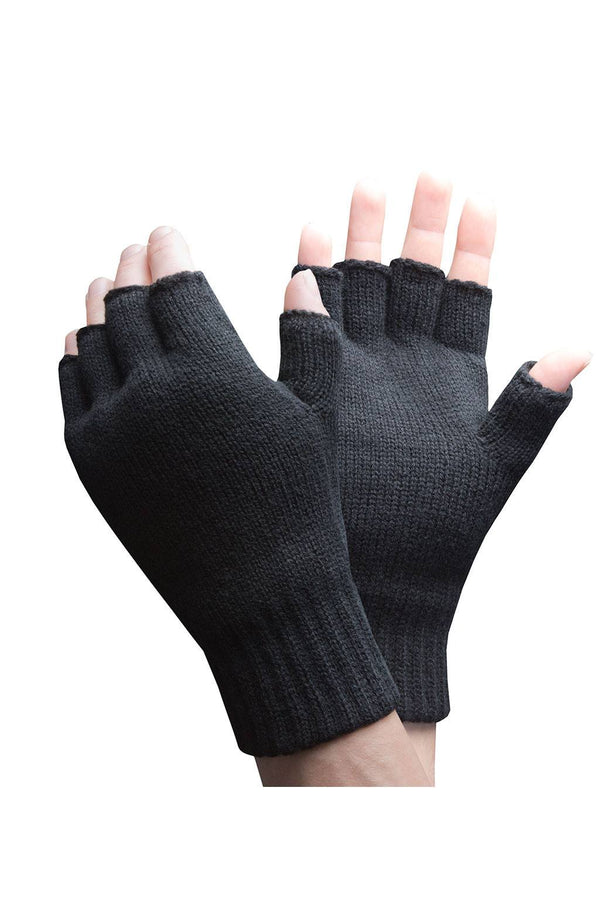
Men's Fingerless Gloves
HeatWeaver lined. Fingers free. Long cuff. Black, navy, charcoal.
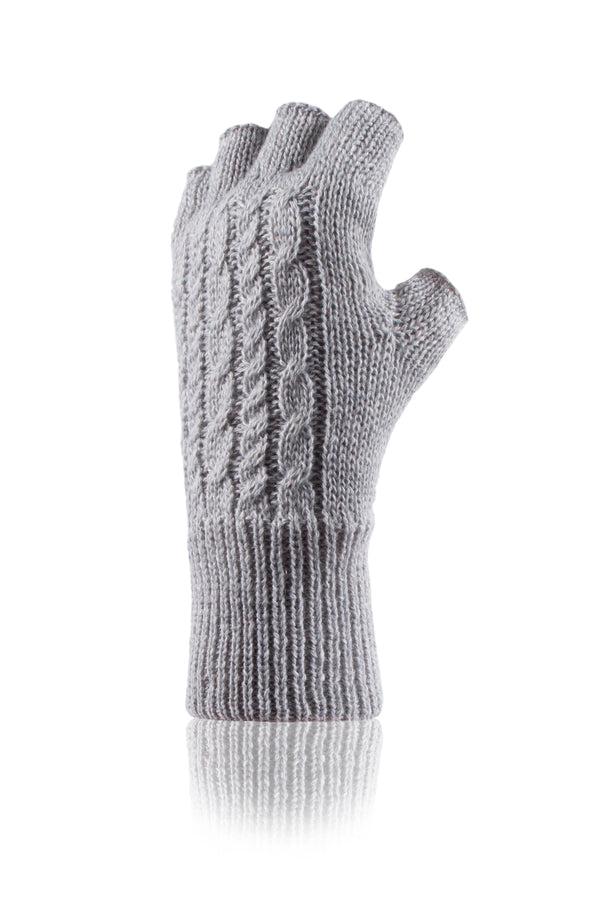
Women's Ayla Cable Knit Fingerless Gloves
HeatWeaver lined. Cable knit. Black, navy, purple, Cloud Grey.
"I gave the fingerless gloves to a guy at the office who is always cold but all of the work is on the computer. He thinks they are great. So far four other "cold natured" people have noticed his, tried them on and ordered." John I., Men's Fingerless Gloves
One pair. Four colleagues. One week. That is the cold office in reverse.
The layer nobody sees
A base layer sits between your skin and your shirt. When it is the right weight, nobody knows it is there.
Heat Holders ULTRA LITE Base Layer Tops sit flat under a button-down, blouse, or polo. HeatWeaver yarn is brushed on both sides for warmth without bulk. They stretch, they move, and nobody knows they are there.
Men's styles include crew neck, mock neck, turtleneck, and zip top. All in the ULTRA LITE weight.
Men's ULTRA LITE Base Layer Top
Lightweight thermal top. Invisible under office clothes. Crew, mock neck, turtleneck, and zip styles.
Women's ULTRA LITE Base Layer Top
Lightweight thermal top. Invisible under a blouse or sweater. Dual-brushed HeatWeaver yarn.
You layer when you go outside. Coat over sweater over shirt. A cold office is the same problem, indoors. The only difference: your layers need to be invisible.
Working from home: different rules
No dress code. No shoe-fit constraint. No thermostat set by someone else. But the cold problem is often worse.
Your house was not designed as a workplace. Drafty rooms, cold floors, a desk against an exterior wall. The fix: go heavier on warmth. Nobody is watching.
ORIGINAL socks (2.3 TOG, 7× warmer than cotton) are the warmest socks in the range. They are too thick for most dress shoes, but that does not matter at home. The long-loop thermal pile and HeatWeaver lining hold significantly more warm air than ULTRA LITE or LITE.
Slipper socks add a gripper sole for hard floors. They function as a sock and a slipper in one: warm, soft, and stable on tile, hardwood, or laminate.
Throws and blankets cover the gap that socks cannot reach. Draped across your lap and legs while you sit at a desk, a fleece-lined throw traps heat across your entire lower body.
Men's ORIGINAL Socks
Maximum warmth. 7× warmer than cotton.
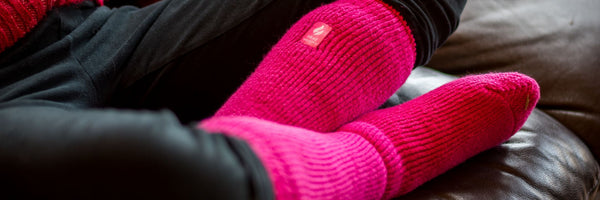
Women's ORIGINAL Socks
Maximum warmth. 7× warmer than cotton.
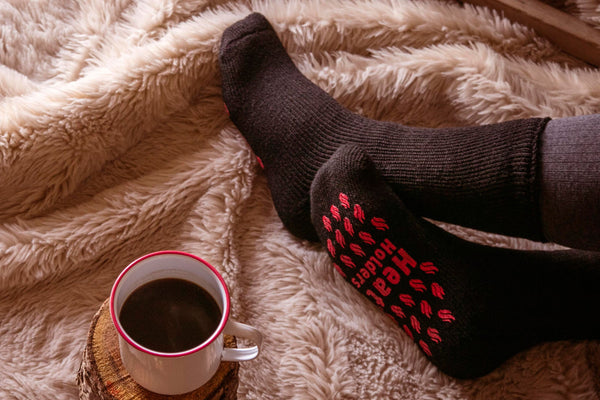
Men's Slipper Socks
Gripper sole. HeatWeaver lined. Safe on hard floors.
Snuggle Throws
Oversized. Fleece-lined. Covers lap and legs while you work.
Men's ORIGINAL Zip Vest
Core warmth with full arm mobility. Zips on and off as temperature fluctuates.
The desk-to-desk effect
It starts with one person. They solve their cold problem. A coworker notices. Then another. Within a week, five people at the same office are wearing the same gloves.
We see it in the reviews constantly. One purchase turns into four or five. Warmth that actually works tends to spread.
Frequently asked questions
Where to go next
What Is a TOG Rating?
Understand the warmth system behind every Heat Holders product. TOG explained in plain language.
Why Are My Feet Always Cold?
Cold feet have causes beyond the weather. Physiology, conditions, and what works.
Heat the Human, Not the House
Lower your heating bill by warming yourself instead of empty rooms. Includes a savings calculator.
Shop the Office Collection
ULTRA LITE socks, fingerless gloves, base layers, and more. Everything in this guide, in one place.


