
Heat the Human, Not the House.
Your furnace heats every room you're not in. Thermal clothing heats you. One of those is expensive. Use the calculator below to see what yours costs.
you set back (DOE)
winter 2025–26
reviews
Run the numbers on your house
The U.S. Department of Energy says you can save up to 10% a year by setting your thermostat back 10–15°F for 8 hours a day. That works out to roughly 1% per degree. Keep the thermostat lower around the clock and the savings are larger: real thermostat data from EnergyHub showed over 5% per degree in Michigan.
The average American household spent $1,011 heating their home last winter (NEADA, February 2026). Even a small thermostat drop adds up over a six-month season.
Enter your own numbers. The math scales the same way on every bill.
These estimates are conservative. The calculator uses 3% per degree, the middle of the 1–5% range found across DOE guidance and real-world thermostat studies. Your results depend on your insulation, heating system, and climate.
What could you save?
What to wear instead of turning up the heat
Socks. Base layer. Blanket. Three pieces, and most people drop a few degrees without thinking about it.
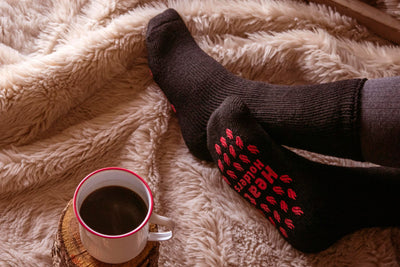
ORIGINAL Crew Socks
Maximum warmth. 7× warmer than cotton. Long-loop thermal pile. Non-binding top.
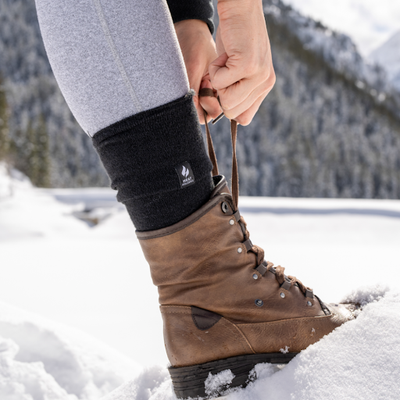
LITE Crew Socks
All-day warmth. 5× warmer than cotton. Thinner profile fits shoes and slippers.
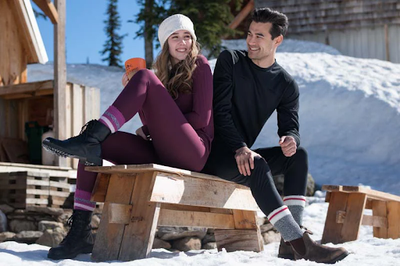
ORIGINAL Base Layer Top
Heavy-weight thermal. Sits under a shirt or sweater. Invisible on a video call.
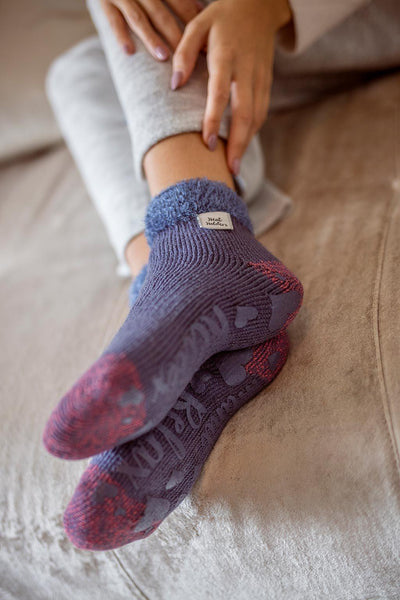
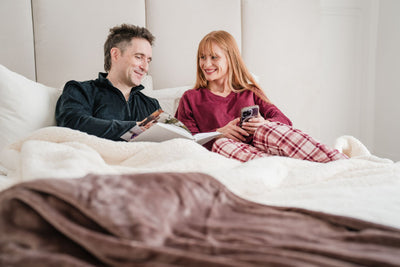
Oversized Throw/Blanket
HeatWeaver-lined thermal throw. Warm enough to leave the thermostat alone.
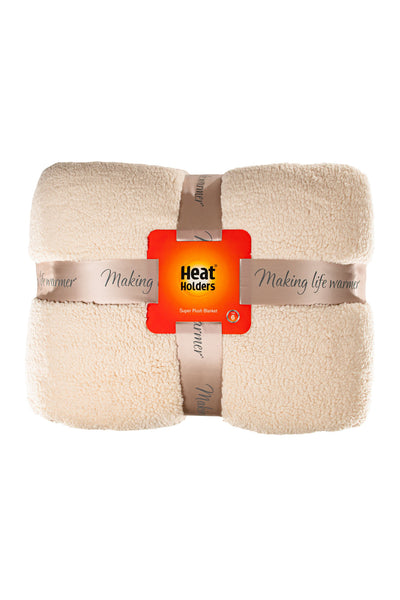
Super Plush Blanket
The blanket customers say feels "like it has electricity attached." Full, queen, and king.
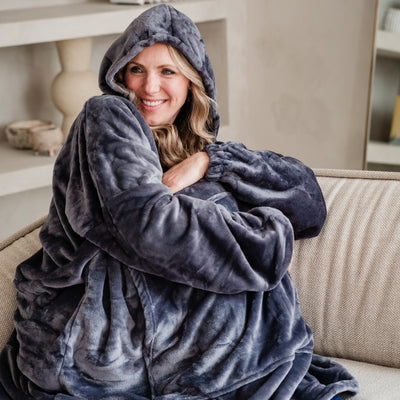
Mega Hoodie
Oversized wearable blanket. One customer went from 74°F to 70°F and stayed there.

The phrase came from a customer
Norrie N. from Texas wrote it in a review of her slipper socks. October 2022. She wasn't quoting marketing copy. She was describing what she does.
"I definitely agree, Heat the Human, Not the House. With climate change comes colder winters. Its not unusual in TX to see temps below freezing. With rising natural gas prices, I have stocked up on these slipper socks to keep my utility bill down."Norrie N., Slipper Socks
She is not alone. Sixteen published reviews mention it unprompted: thermostat down, socks on, bill lower. People have been writing this since 2014.
Everything you need. Nothing you don't.
Why warming yourself costs less
Your furnace doesn't know you're on the couch. It heats the bathroom, the hallway, and the ceiling at the same rate. You're paying to warm rooms nobody is sitting in.
Thermal clothing reverses the equation. Instead of warming the air around you, you trap the heat your body already produces. No electricity. No batteries. Just better insulation on the human instead of the house.
The savings rule
The U.S. Department of Energy says you can save up to 10% a year by setting your thermostat back 10–15°F for 8 hours a day. The industry shorthand: roughly 1% per degree. Keep it lower around the clock and the savings grow. Real thermostat data from EnergyHub showed over 5% per degree in Michigan.
Three degrees down. On the average US heating bill of $1,011 per season (NEADA, February 2026), that's roughly $91 back in your pocket.
Heating costs rose 11% last winter. The numbers only get more persuasive.
Why "put on a sweater" doesn't cut it
Everyone says it. Nobody specifies which sweater.
A cotton sock scores 0.3 TOG (the lab measure of thermal insulation). Heat Holders ORIGINAL socks score 2.3 TOG. Seven times warmer. That's the difference between needing the furnace at 72°F and being comfortable at 68°F.
Cotton absorbs moisture and holds it against your skin. Damp fabric cools you instead of warming you. Thermal pile manages moisture and traps still air close to skin. Different material, different result.
The 1% per degree estimate is conservative. Real thermostat data from EnergyHub showed savings above 5% per degree in Michigan winters. Lower thermostat, lower bill. The direction never changes.
The home warmth kit
Socks. Base layer. Blanket. Three pieces, and most people drop 3°F without thinking about it.
Start at the feet
Cold feet make the whole body feel cold. Socks are the single highest-impact change.
ORIGINAL Crew Socks Men's → Women's →
LITE Crew Socks Shop LITE →
Add a base layer
Traps core heat under your regular clothes. The piece that lets you sit at a desk in a 66°F house and not think about it.
ORIGINAL Base Layer Top Men's → Women's →
Slipper socks for hard floors
Tile, hardwood, and laminate pull heat from your feet by conduction. Slipper socks add a gripper sole.
Ankle Slipper Socks Men's → Women's →
A blanket that earns its keep
For evenings. HeatWeaver lining traps warmth the same way the socks do, scaled up.
Oversized Throw/Blanket Shop Throws →
Super Plush Blanket Shop Super Plush →
The full evening kit
Mega Hoodie Shop Mega Hoodie →
Room by room
Different rooms lose heat differently. Match the kit to the zone.
Living room
Sitting still drops your metabolic heat production. The room that felt fine while you were cooking feels cold the moment you sit down. ORIGINAL socks or slipper socks on the feet. A throw or Mega Hoodie over the top. That covers the two places heat leaves fastest: feet and core.
"Hands down the warmest blanket we've ever bought! We don't even turn the heat on in our bedroom and it keeps us warm as toast!"Joseph M., Super Plush Blanket
Home office
You're stationary for hours. Your feet cool first, then your hands. The base layer is the key piece here: core warmth under work clothes, no bulk, no change on camera. Pair with ORIGINAL or LITE socks. Slipper socks if you're on hard floors.
"I have a drafty house with cold floors and I'm able to walk around in these without any chill. I work from home, so I wear these all day."Stacy S., ORIGINAL Crew Socks
Bedroom
A cooler bedroom is better for sleep. Research on sleep thermoregulation recommends 60–67°F for optimal sleep (Okamoto-Mizuno & Mizuno, 2012, Journal of Physiological Anthropology). The Super Plush Blanket handles the bed. For cold feet, put on warm, non-restrictive socks 20–30 minutes before you turn in. Heat Holders sleep socks (women's) or ORIGINAL crew socks (men's and women's) both work. Warm feet trigger vasodilation, which helps lower core temperature and signals sleep onset (Kräuchi et al., 1999, Nature).
Flannel pajama pants complete the kit. Cooler room, lower bill, better sleep.
Your house. Your situation.
Not every cold house is cold for the same reason.
The drafty old house
Old walls, old windows, heat leaving through every gap. Insulation costs thousands and you might not own the place. Thermal clothing is the immediate answer: personal insulation for the house you have, not the house you wish you had.
"I live in an old New England house where the thermostat is kept ~60°F all winter and the 'thermal' windows still let drafts in. I'm wearing one of the women's original base layer tops and feel comfortable for the first time this winter!"Ann G., ORIGINAL Base Layer Top
ORIGINAL tier. 2.3 TOG socks, heavy-weight base layers. Built for the widest gap between what your house gives you and what you need.
The apartment you can't control
Shared heating. Landlord's thermostat. Radiators that cycle on someone else's schedule. Thermal clothing puts warmth on your terms.
"My apartment is freezing and drafty in the cold winters. These socks are amazing for keeping my legs super warm."Denise B., ORIGINAL Boot Socks
Socks and a base layer. Two pieces that close the gap a badly timed radiator leaves open.
Energy-conscious by choice
Your house isn't broken. You've set the thermostat to 65°F because you'd rather keep the money. The calculator above was built for you. You know what your bill is. You know what you'd like it to be. The kit is the bridge.
"previously would have been inclined to turn up the furnace, but now these socks make me so warm (after a while even too hot) I can easily keep my thermostat on 68, and I have much improved heat bills"Cheri G., LITE Crew Socks
The California surprise
California surprises people. But many California homes were built without serious insulation or central heating, because the assumption was that the climate didn't need it. When nights drop into the 40s and 50s, those houses get cold fast.
LITE socks (1.6 TOG, 5× warmer than cotton) are often the right starting point. Meaningful warmth without the bulk of the ORIGINAL tier, which can be too much when afternoons climb back up.
Customers have been doing this for over a decade. Reviews mentioning thermostats, drafty homes, and lower bills go back to 2013. Not a trend. A proven approach.
Frequently asked questions
Keep going
Shop the At-Home Range
Socks, base layers, blankets, pajamas. The full kit.
What Is a TOG Rating?
The warmth system behind every Heat Holders sock, explained.
Cold Feet at Night
Cooler bedrooms, better sleep, warm feet. The sleep guide.
Cold Office Survival Guide
WFH in a cold house or commuting to a freezing office.


