
Why Are My Feet Always Cold?
Your feet are cold again. You are wearing socks. You are inside. The heating is on. This guide covers every cause, and what actually fixes it.
What kind of cold feet do you have?
Answer two quick questions. We will point you to the right section.
Why feet get cold: the five main causes
Your feet are the furthest point from your heart. When your body senses cold or stress, it pulls blood inward. Your feet are the first thing it sacrifices. When cold feet are persistent, one of these is usually why.
Poor circulation
Restricted blood flow from narrowed arteries, inactivity, tight clothing, or smoking. PAD affects 8.5M+ Americans.
Read more →Raynaud's phenomenon
Blood vessels overreact to cold. Toes turn white, blue, red. Affects 3 to 5% of the US population.
Read more →Thyroid, anemia & cold intolerance
Body not producing enough heat internally. Cold everywhere, feet worst.
Read more →Diabetes & neuropathy
Nerve damage disrupts temperature signals. Feet may feel cold when actually warm.
Read more →Your socks are the problem
Cotton holds moisture. Tight socks restrict flow. The most fixable cause.
Read more →Cold feet at night
Circulation changes at bedtime. Research: warm feet predict faster sleep onset.
Read more →What you need to know, by cause
Select a topic. Each section covers what is happening, what to watch for, and what helps.
Poor circulation and cold feet
Your circulatory system is a delivery network. Your feet, being the most distant stop, are the most vulnerable when that network is compromised.
What restricts blood flow
Peripheral artery disease (PAD). Fatty deposits narrow arteries supplying your legs and feet. The CDC reports PAD affects approximately 8.5 million Americans aged 40+. Prevalence: 2–4% under 50, rising to 10–15% over 70.
Sedentary lifestyle
Hours in one position reduces blood flow. A short walk often fixes cold feet immediately.
Smoking
Nicotine constricts blood vessels. Over time, damages artery linings.
Tight clothing and footwear
Compression acts as a partial tourniquet on your warmth supply.
The socks test: If your socks leave red marks when you take them off, they are too tight. Switch to non-binding. Your circulation will thank you.
What helps
Movement is the single most effective intervention. Walking five minutes gets blood moving. The whole-body warmth principle matters: a thermal base layer can do more for your feet than doubling up on socks.
Products for circulation-related cold feet
ORIGINAL Socks
Maximum warmth with a non-binding top. No compression on your calves. Long-loop thermal pile holds warm air close to skin.
Slipper Socks
Tile and hardwood conduct heat away from feet rapidly. Non-slip soles add safety for anyone less steady.
Thermal Base Layers
Keeping your core warm reduces the signal that pulls blood away from your feet. A circulation investment.
Raynaud's and cold feet
If your toes turn white when you hold an iced drink, you may have Raynaud's phenomenon. It has one defining feature: color change.
The three phases
White: blood flow drops
Vessels constrict suddenly. Toes turn pale and feel numb.
Blue: oxygen depleted
Without oxygenated blood, tissue turns blue or gray.
Red: blood returns
Vessels relax and blood rushes back. Often the most painful phase.
How common?
3 to 5% of the US population. The Framingham Study found prevalence of about 10% in women and 8% in men (Brand et al., 1997, Vascular Medicine). More common in women; primary form often starts in teens/twenties. ~25% have family history. Most have primary Raynaud's: uncomfortable but not dangerous.
Not sure? Toes that turn white after shoes, fingers numb in rooms below 70°F, diagnosis is straightforward. Talk to your doctor.
What helps
No cure, but every condition organization agrees: keep your whole body warm. When core temperature stays up, fewer and less severe attacks. Layer loose, not tight. Thermal socks before you feel cold, not after.
Products for Raynaud's
ORIGINAL Socks
Where most Raynaud's customers start. 7x warmer than cotton. Non-binding fit that does not restrict compromised circulation.
LITE Socks
Same thermal yarn, thinner profile. Fits most casual shoes and boots. You trade some warmth for wearability.
Heat Holders socks are tested and endorsed by Raynauds.org.
When cold feet mean cold everything
If you feel cold everywhere (hands, core, a general sense you run colder than everyone), the problem may be systemic. Your body is not producing enough heat.
Hypothyroidism
Thyroid regulates metabolism. Underactive = slower heat production. Subclinical hypothyroidism affects ~4.3% of the population. About half experience cold intolerance. Other signs: fatigue, weight gain, dry skin, thinning hair. A thyroid panel is straightforward. Treatment often improves cold intolerance significantly.
Iron-deficiency anemia
Low iron = reduced oxygen delivery = less heat generated. Symptoms: fatigue, pallor, shortness of breath, feeling cold generally. Iron and thyroid problems can coexist and compound each other.
POTS and dysautonomia
Autonomic nervous system dysfunction affecting blood vessel regulation and temperature. Cold feet with rapid heart rate on standing. Diagnosable and manageable.
If you're cold everywhere, not just feet, talk to your doctor about thyroid and iron checks. Both are simple blood tests.
Products for cold intolerance
Thermal Base Layers
The most important product for systemic cold intolerance. When your core is warm, your body stops diverting heat away from your feet.
ORIGINAL Socks
Maximum foot warmth at home. Pair with base layers for a whole-body warmth system.
Sleep Socks
Cold intolerance does not switch off at night. Soft, warm, and non-restrictive for comfortable sleep.
Nerve damage and the cold-feet paradox
Diabetes and cold feet involve two mechanisms: damaged blood vessels reducing flow, and damaged nerves disrupting temperature signals.
The paradox
Feet may feel cold when actually warm, because nerves aren't sending accurate signals. Or genuinely cold without you feeling it. You cannot always trust what your feet tell you.
Warmth choices matter more
Non-restrictive fit is critical
Every diabetes guideline recommends non-restrictive socks. No marks, no compression.
No direct heat
Hot water bottles carry burn risk with reduced sensation. Passive insulation is safer.
Daily foot inspection
Standard guidance. Cuts, blisters, redness, color changes.
Why your feet are cold even with socks on
The socks you're wearing may be making your feet colder.
Cotton is the enemy of warmth
Cotton absorbs moisture and holds it against your skin once your feet sweat, which they do even at rest. Wet skin loses heat far faster than dry skin. Your cotton sock is not warming your foot. It is cooling it.
Thick does not mean warm
A thick cotton sock is a thicker sponge. What matters: moisture management (move sweat away, not hold it) and loft (brushed fibers trap still air, which is the real insulator).
TOG ratings
| Material | Warmth | vs cotton |
|---|---|---|
| Standard cotton | 0.3 TOG | Baseline |
| Heat Holders ULTRA LITE | 1.0 TOG | 3x |
| Heat Holders LITE | 1.6 TOG | 5x |
| Heat Holders ORIGINAL | 2.3 TOG | 7x |
The simplest test: If your socks are cotton, switch them. That single change solves cold feet for a surprising number of people.
Products by situation
ORIGINAL Socks
The warmest everyday sock. Long-loop thermal pile, non-binding fit. Where most cold-feet customers start.
Slipper Socks
Same thermal warmth with non-slip soles. Tile and hardwood conduct heat away from feet rapidly.
LITE Socks
Same thermal yarn in a thinner profile. Fits most casual shoes and boots. 5x warmer than cotton.
ULTRA LITE Socks
Thinnest thermal option for shoes where bulk is not possible. 3x warmer than a standard cotton sock.
Cold feet at night and sleep
Your circulation slows at bedtime. Metabolic rate drops. Women are disproportionately affected. Blood vessels constrict more aggressively, estrogen amplifies the response.
The sleep science
Research in Nature (Krauchi et al., 1999) found warm feet are one of the strongest predictors of rapid sleep onset. The mechanism: distal vasodilation. Warm feet dilate blood vessels, releasing heat, helping lower core temperature, which is the sleep-initiation signal. A 2018 study (Ko & Lee, Journal of Physiological Anthropology) found socks increased total sleep time by approximately 32 minutes.
Timing: Put socks on 20 to 30 minutes before bed, not when already in bed with cold feet. Warmth needs time to trigger vasodilation. If you kick them off later, that is fine. The socks did their job at sleep onset.
Products for cold feet at night
Sleep Socks
Designed specifically for bed. Soft, warm, no grip soles, no bulk. Feather-top and rib-cuff styles feel close to wearing nothing while still insulating.
ORIGINAL Socks
If you run very cold at night, the full 2.3 TOG provides maximum warmth. Some people prefer the extra insulation, especially in winter.
When cold feet need medical attention
Most cold feet are uncomfortable but not dangerous. But some are a signal.
See your doctor if:
Color changes that don't resolve
White, blue, purple toes that persist or are painful.
Cold in one foot only
Asymmetric coldness suggests localised circulation problem.
Persistent numbness or tingling
Especially worsening over time.
Slow-healing wounds
On feet or lower legs, combined with cold.
Leg pain when walking
Intermittent claudication, a classic PAD symptom.
Cold feet + fatigue + weight changes
May indicate thyroid or anemia. Both easily tested.
What your doctor will ask
Duration, which feet, color changes, numbness, whether cold to touch or just to you, family history, medications. An ankle-brachial index and blood tests identify most causes quickly.
We're a warmth brand, not a clinic. For diagnosis and treatment, your doctor is the conversation. Warmth strategies work alongside medical treatment, not instead of it.
Socks for feet that are always cold
Warmth without restriction. Matched to the situation.
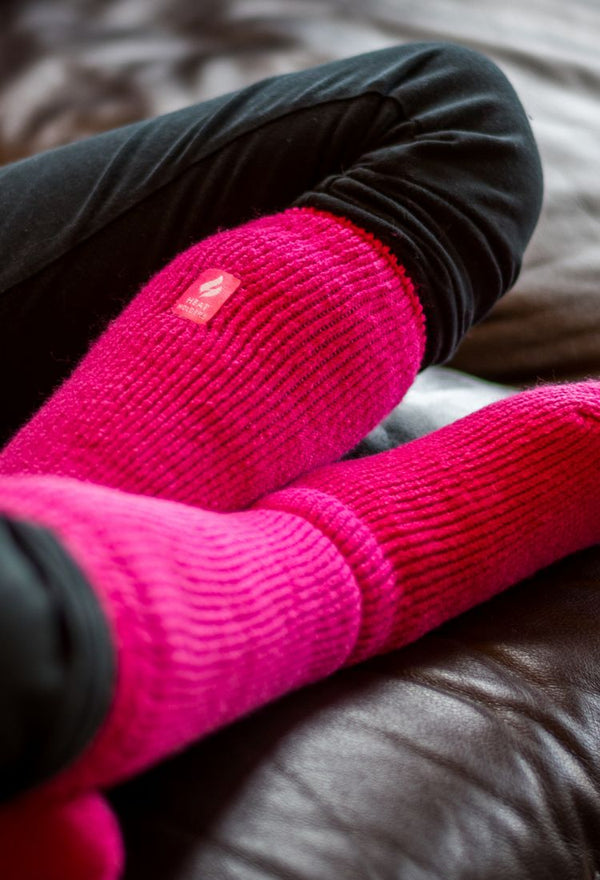
ORIGINAL Socks
Maximum warmth. Non-binding.
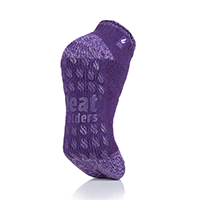
Slipper Socks
Non-slip for tile and hardwood.
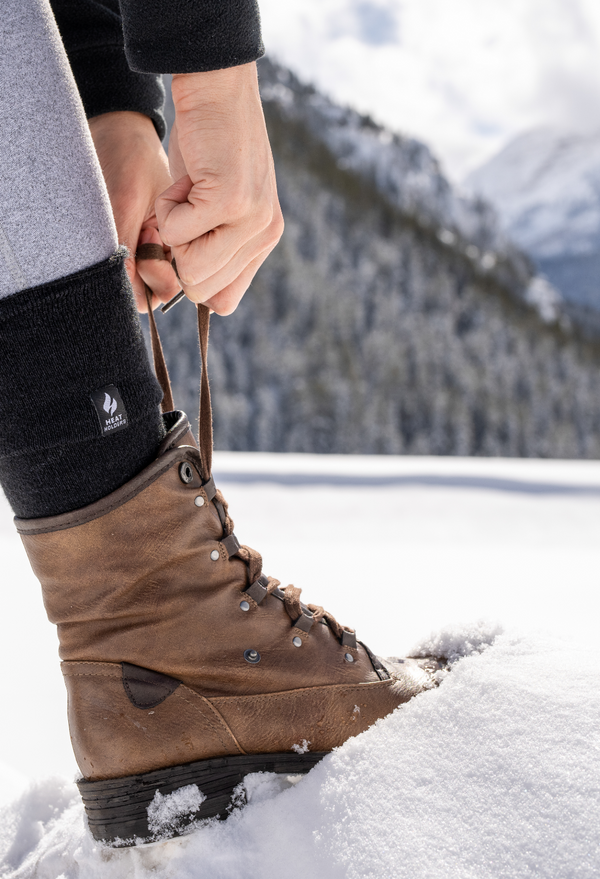
LITE Socks
Thermal in a thinner profile.
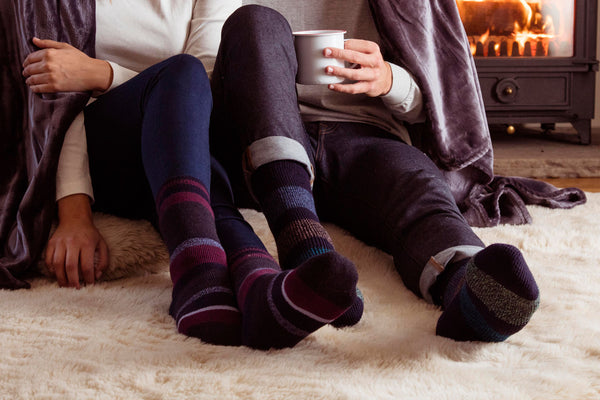
ULTRA LITE
Thinnest thermal option.
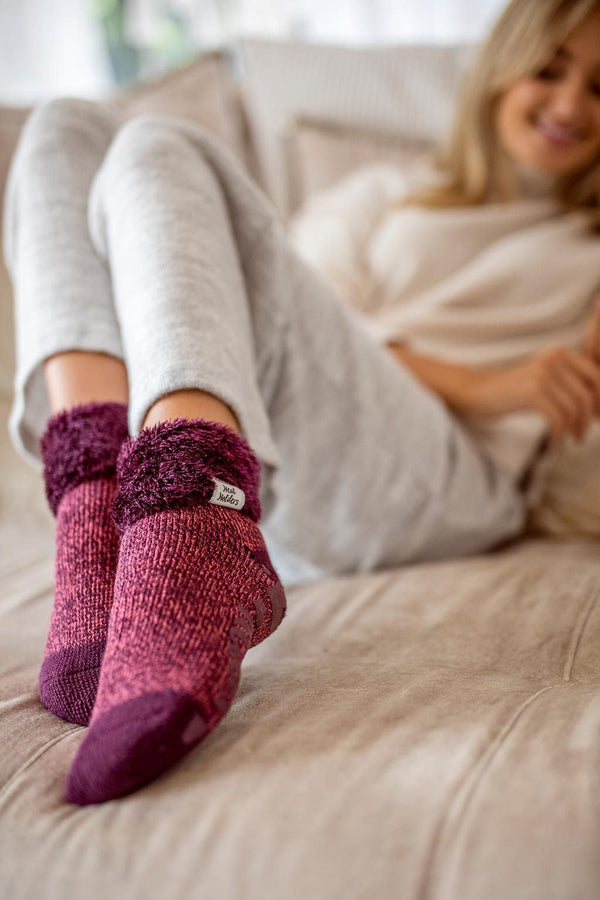
Sleep Socks
Soft, warm, no grip.
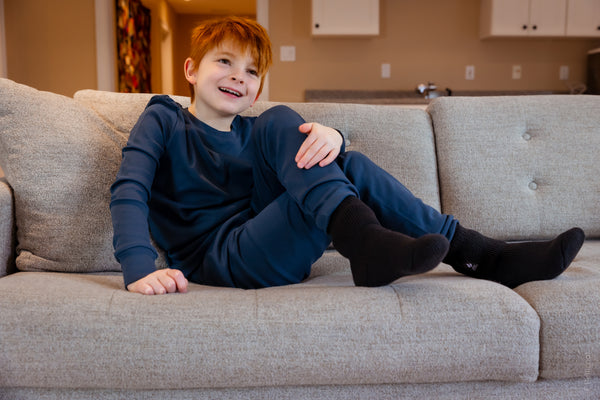
Kids' ORIGINAL
Soft. Sized for growing feet.
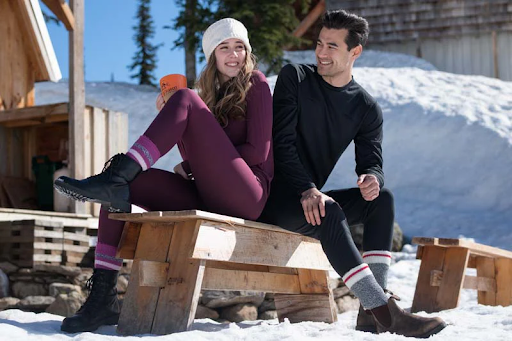
Base Layer
Warm core, warm feet.
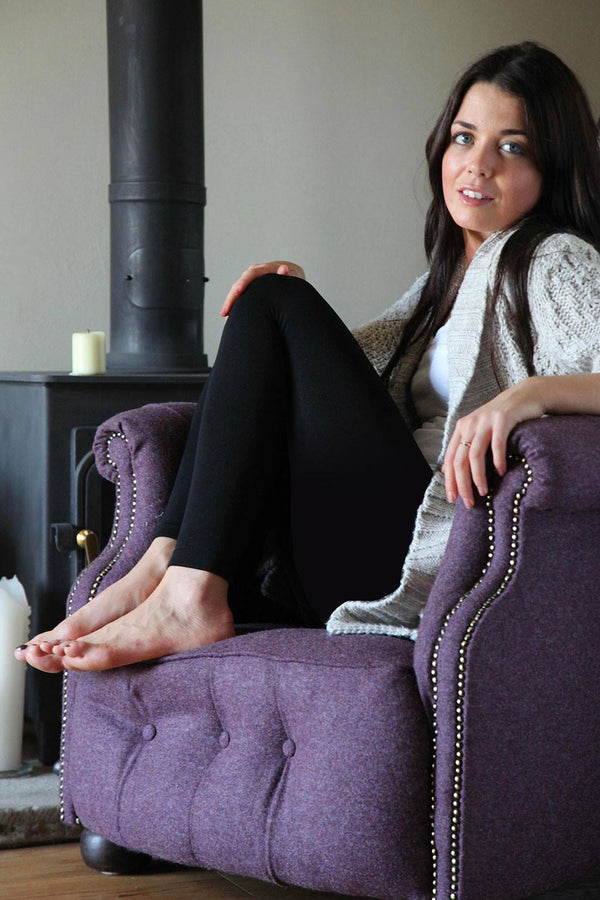
Thermal Leggings
Lower body insulation.
Warmth you can measure
Heat Holders' thermal rating is lab-tested, not a marketing claim. TOG measures how well a fabric holds heat. ORIGINAL: 2.3 TOG, which is 7x warmer than cotton.
Specially developed thermal yarn, intensively brushed into a long-loop pile, traps warm air close to your skin. Manages moisture too. Warmth without dampness.
Every sock is non-binding. No tight cuffs, no marks. For circulation-related cold feet, this is not just comfort. It is warmth.
Cold feet FAQ
However, persistently cold feet can occasionally signal an underlying condition. Peripheral artery disease (PAD) restricts blood flow through narrowed arteries and affects over 8.5 million Americans aged 40 and older. Raynaud's phenomenon causes blood vessels in your fingers and toes to overreact to cold, temporarily cutting off supply. An underactive thyroid reduces your body's heat production systemically, and iron-deficiency anemia impairs oxygen delivery to your tissues. Diabetic neuropathy can damage the nerves that regulate temperature perception in your feet.
The signals that warrant a doctor visit: toes that change color (white, blue, or red) and do not resolve quickly, coldness in one foot but not the other, persistent numbness or tingling that worsens over time, wounds on your feet that heal slowly, or leg pain and cramping during walking that stops when you rest. A physical exam, an ankle-brachial index test, and basic blood work can identify or rule out the most common medical causes.
First, women's blood vessels constrict more aggressively in response to cooling. When the body senses a temperature drop, it restricts blood flow to the extremities to protect the core. Women's vascular systems trigger this response sooner, tighter, and for longer. Estrogen amplifies the effect by making blood vessels more sensitive to temperature changes, which is why many women notice their feet feel colder at certain points in their menstrual cycle.
Second, body composition plays a role. Women typically carry a higher percentage of body fat, which insulates the core effectively but does not generate heat the way muscle tissue does. Muscle produces metabolic heat during activity and at rest. With less muscle mass on average, women generate roughly 5 to 13 percent less metabolic heat than men during comparable activities (Gao et al., 2023, Energy and Buildings).
Third, women tend to have a lower resting metabolic rate relative to body size, meaning their baseline heat production is lower. The net result: in the same room, at the same temperature, wearing the same socks, a woman's feet will run measurably colder. This is not about being less hardy. It is straightforward thermoregulation, and it means thermal insulation is more important, not less.
Three properties actually determine how warm a sock keeps your foot. First, moisture management: the material needs to move sweat away from your skin rather than absorbing and holding it. Thermal yarns, acrylic blends, and merino wool all do this. Cotton does not. Second, internal structure: the inside of the sock matters more than the outside. Brushed, long-loop fibers create small pockets of still air between your skin and the cold. That trapped air layer is your insulation, working on the same principle as a down jacket. Third, fit: a sock that is too tight compresses the blood vessels that carry warm blood to your feet, acting as a partial tourniquet. Non-binding construction that stays up without squeezing is not just a comfort choice. It is a warmth choice.
This is why a well-engineered thermal sock at the right TOG rating will outperform two pairs of thick cotton socks. Heat Holders ORIGINAL socks are rated at 2.3 TOG (roughly 7 times warmer than a standard cotton sock) because they combine all three properties: moisture-wicking thermal yarn, an intensively brushed long-loop pile interior, and a non-binding fit.
A 2018 study in the Journal of Physiological Anthropology found that sleeping with socks increased total sleep time by approximately 32 minutes and reduced the number of nighttime awakenings. For anyone already struggling with sleep quality, that is a meaningful improvement from a simple intervention.
The right sock for bed is different from a daytime sock. You do not need grip soles (those are for floors, not sheets). You want softness, warmth, and a non-restrictive fit that you can forget you are wearing. Put them on 20 to 30 minutes before you plan to sleep, not when you are already lying in bed with cold feet, because the vasodilation process needs time to work. If you wake up warm and kick them off during the night, that is completely normal and means the socks did their job at the critical moment of falling asleep.
Other signs that point toward a circulation component: skin on your feet or lower legs that looks paler, shinier, or thinner than it used to; cuts or blisters that take longer to heal; hair loss on your lower legs or feet; and cramping or aching in your calves during walking that resolves when you stop (a symptom called intermittent claudication, which is a hallmark of peripheral artery disease).
Circulation issues range from the everyday to the medical. Sitting or standing in one position for hours slows blood delivery to your lower extremities, which is why a short walk often fixes cold feet immediately. Smoking constricts blood vessels and damages artery walls over time. Tight socks, narrow boots, and constrictive clothing can compress the vessels that carry warmth to your feet. At the more serious end, peripheral artery disease (PAD) involves fatty deposits narrowing the arteries in your legs and affects approximately 8.5 million Americans over 40.
If you suspect circulation, your doctor can perform an ankle-brachial index (ABI) test, which compares blood pressure in your ankle to your arm. It is non-invasive, takes a few minutes, and can identify reduced blood flow reliably.
Symptoms that suggest iron-deficiency anemia alongside cold feet include persistent fatigue, pallor (particularly noticeable in your nail beds and inner eyelids), shortness of breath during light activity, dizziness, and a general feeling of being cold. A simple blood test measuring your hemoglobin and ferritin (your body's iron stores) can confirm or rule it out.
Vitamin B12 deficiency can also cause cold feet through a different pathway. B12 is essential for nerve function and red blood cell production. Low B12 can cause peripheral neuropathy (nerve damage that affects sensation in your hands and feet) and reduce the number of healthy red blood cells available to carry oxygen. The result is similar: impaired heat delivery to your extremities.
It is also worth noting that iron deficiency and thyroid dysfunction frequently coexist. Low iron can impair thyroid function, and an underactive thyroid can impair iron absorption, creating a cycle where both conditions reinforce each other. If your doctor finds one, it is worth testing for the other.


